

Georgia Is in an Extreme Drought: Here's What to Do About Your Lawn
What's Happening Right Now
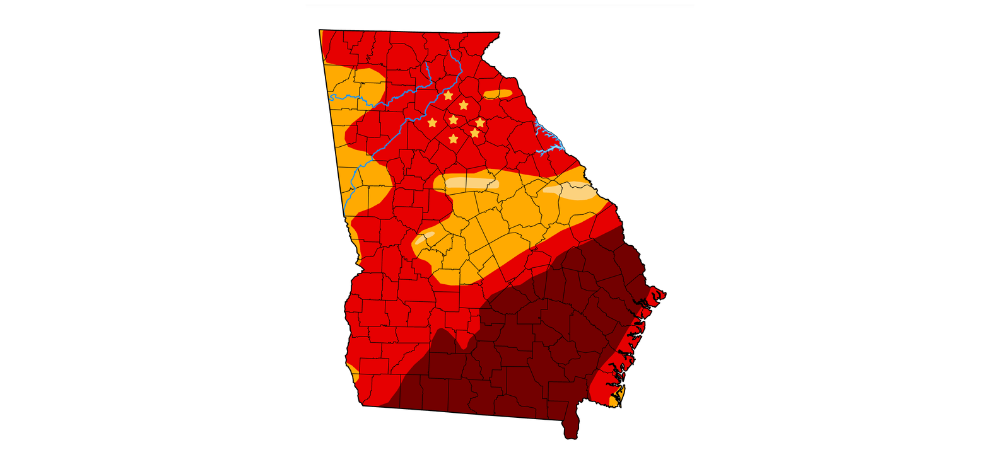
If your lawn looks stressed, brown, or like it's barely hanging on, you're not imagining it and you're not alone. Six counties in northeast and north-central Georgia are currently classified as D3 (Extreme Drought) by the U.S. Drought Monitor, and the situation across the entire state is severe. As of spring 2026, roughly 96–98% of Georgia's land area is under some form of drought conditions, the worst spring recharge the state has seen in well over a century.
On April 27, 2026, the Georgia Environmental Protection Division (EPD) issued a statewide Level 1 Drought Response declaration, the first formal drought declaration in Georgia since 2012. While Level 1 doesn't add new restrictions beyond what's already in place year-round, it's a clear signal from state officials that water resources are under serious strain and that conservation matters right now.
What does D3 actually mean? According to the U.S. Drought Monitor, an Extreme Drought (D3) classification reflects precipitation percentiles in the bottom 2–5% of historical records. It triggers major agricultural losses, widespread water shortages, and significant stress on lawns, trees, and landscaping.
The Affected Counties
The following northeast Georgia counties that we service are all currently sitting at D3 on the U.S. Drought Monitor map: Barrow, Clarke, Gwinnett, Hall, Oconee, and Walton Counties.
These counties share the same drainage basin pressures and are home to hundreds of thousands of residents across communities like Gainesville, Athens, Lawrenceville, Monroe, Watkinsville, and Winder. The cumulative rainfall deficit has been building for months, and water supply reservoirs and aquifer levels are well below seasonal norms.
Know the Rules Before You Water
Georgia's Water Stewardship Act already places year-round restrictions on outdoor irrigation, drought or no drought. Under the current Level 1 declaration, those permanent rules remain in effect.
- Allowed hours: Before 10:00 AM or after 4:00 PM. No watering during peak evaporation hours.
- Best window: 5:00–8:00 AM. Soil absorbs moisture best, and grass blades dry by evening, which reduces disease risk.
- Automated systems: Must follow the hour restrictions. Odd/even day schedules may also apply, depending on your municipality.
- Hand watering: Allowed 24 hours a day with a shut-off nozzle, exempt from day-of-week limits.
- Soaker/drip hose: Allowed any time and highly recommended during drought for their efficiency.
- Check your municipality. Gwinnett County and Athens-Clarke County have each confirmed the statewide Level 1 response applies locally. Always verify with your water provider, as Level 2 restrictions could be declared if conditions worsen. Level 2 would trigger mandatory 2-day-per-week limits.
HOA concern? Under Georgia law (OCGA 44-3-235), HOAs cannot enforce lawn-appearance standards that conflict with state drought law. If your HOA sends a violation notice for a brown or dormant lawn, respond in writing, citing the Water Stewardship Act and the active EPD drought declaration. Georgia law is on your side.
What Extreme Drought Does to Your Lawn
Extended drought affects your lawn at every level, from the visible turf blades down to root systems and soil biology.
Dormancy vs. Death: Know the Difference
If your warm-season grass (Bermuda, Zoysia, Centipede) has gone brown, don't assume it's dead. These grasses evolved to survive drought by going dormant, essentially hitting pause on above-ground growth to conserve moisture in their root systems. A dormant lawn can look nearly identical to a dead one.
The tug test: grab a handful of brown grass and pull. If you feel resistance and the roots are holding, your grass is dormant and alive. If the grass slides out of the soil easily with no root resistance, that's a sign of real damage or death.
Lawn Stress Warning Signs
Beyond browning, drought-stressed lawns often show footprint impressions that don't spring back, wilting or curling grass blades, thin or patchy areas that aren't recovering, and increased weed pressure as weeds outcompete stressed turf for available moisture.
Your Grass Type Matters
- Bermuda Grass — High Drought Tolerance: Common throughout the Atlanta suburbs and northeast Georgia. Goes dormant brown under stress but recovers well. Needs roughly ½–¾ inch of water every 7 days at minimum to stay alive in dormancy.
- Zoysia — High Drought Tolerance: Similar drought resilience to Bermuda. Deep watering on your allowed days, taller mowing, and no fertilizer under stress. Recovery typically follows 7–10 days after adequate water resumes.
- Centipede — Medium Drought Tolerance: More sensitive than Bermuda or Zoysia to prolonged drought. Monitor for brown patches carefully and avoid over-watering, which can cause as much damage as under-watering.
- Tall Fescue — Lower Drought Tolerance: Common in north Georgia and the transition zone around the Atlanta metro. Cool-season grass that struggles in summer drought. Focus on survival watering, at minimum ½ inch every 14 days to keep crowns alive.
What You Should Do Right Now
Extreme drought calls for a shift in how you think about lawn care. The goal isn't a perfect-looking lawn. It's protecting your investment until conditions improve.
Water Deeply and Infrequently
Shallow, frequent watering encourages shallow roots that are even more vulnerable to drought. Instead, water deeply, about 1 to 1.5 inches total per week including any rainfall, and less often. This trains roots to grow deeper into the soil where moisture lingers longer. Set your irrigation zones for 15–25 minutes per zone during allowed hours.
Raise Your Mowing Height
Taller grass blades shade the soil surface, reduce evaporation, and keep roots cooler. During drought, raise your mower deck to the highest recommended setting for your grass type, generally around 3.5–4 inches for most cool-season lawns. Never remove more than one-third of the blade in a single mowing to avoid scalping your lawn.
Stop Fertilizing
Applying nitrogen fertilizer to a drought-stressed lawn is one of the worst things you can do right now. Fertilizer pushes growth, and growth demands water the lawn doesn't have. It increases stress, can burn roots, and depletes what little soil moisture remains. Hold off on any fertilizer applications until the drought eases and your lawn is actively growing again.
Don't Overwater Either
It's tempting to overcompensate when you see a stressed lawn, but saturating dry, compacted soil can push water past the root zone or cause runoff. Water slowly and let it absorb. A soaker hose or drip system is far more efficient than a sprinkler in drought conditions.
Accept Some Dormancy
If you're unable to water adequately, allowing warm-season grass to go fully dormant is far better than sporadic partial watering. A lawn that enters full dormancy with a consistent minimal survival schedule (roughly ½ inch every couple of weeks for Bermuda and Zoysia) will recover once rains return. A lawn stressed with inconsistent watering that never goes fully dormant may come out worse.
Minimize Traffic on Stressed Turf
Foot traffic on drought-stressed grass damages cell walls that are already under pressure, especially something like a Centipede lawn, which is not great with foot traffic to begin with. Limit activity on brown or stressed areas as much as possible. Kids' play, furniture, and vehicles can all cause compaction and breakage that leads to dead spots.
Hold Off on Aeration and Overseeding
These are great lawn health practices, but not right now. Aerating dry, hard soil is stressful and ineffective, and overseeding during drought gives new seed almost no chance of survival. For Tall Fescue, make sure to wait until the fall to aerate. Wait until consistent moisture returns before scheduling either for your warm-season grasses.
Quick Reference: Do These Things:
- Water before 10 AM or after 4 PM
- Water deeply, 1–1.5 inches per week total
- Raise your mowing height depending on your grass type
- Use soaker hoses or drip irrigation when possible
- Do the tug test to check dormancy vs. death
- Check your local watering schedule and restrictions
- Mulch around trees and shrubs to retain soil moisture
Quick Reference: Avoid These Things
- Watering between 10 AM and 4 PM
- Applying any nitrogen fertilizer
- Mowing too short
- Aerating or overseeding right now
- Heavy foot traffic on brown turf
- Letting automated systems run on their old pre-drought schedules
- Shallow, frequent watering cycles
Looking Ahead
Droughts in Georgia don't end overnight. The U.S. Drought Monitor distinguishes between short-term drought (under 6 months, primarily affecting agriculture and lawns) and long-term drought (6+ months, with deeper impacts on hydrology and groundwater). Given how dry this spring has been, full recovery of soil moisture and water tables in these counties may take several months of above-average rainfall.
Keep an eye on the U.S. Drought Monitor's Georgia page — it updates every Thursday and gives you the clearest picture of where conditions are heading. Also watch for EPD announcements, as a Level 2 declaration would trigger stricter mandatory watering restrictions across the state.
The good news is that dormant lawns are resilient. When rains return and temperatures moderate, properly maintained warm-season grass has a strong recovery track record. The work you do now, conserving water, protecting your soil, and keeping your lawn alive rather than just green-looking, is exactly the right investment. If you want have some other questions, feel free to contact our team!